Practical Python engineering for people building data pipelines and Spark jobs that last

Python for data work, done properly

Python is now the common language of data engineering, whether you are on Fabric, Databricks, Snowflake or SQL Server. Writing it well is a different skill from writing SQL: tests, packaging, performance and upgrades all matter. SQLBits is where T-SQL teams and Spark teams learn that craft from each other. 

Practical Python and Spark skills you can put to work

PySpark performance and skew, Spark Connect, UDFs and Arrow, notebooks versus packaged code, pandas, Polars and DuckDB, testing, CI/CD and Python version upgrades. Plus how coding agents are changing the way this code gets written and reviewed. 

Learn from people who ship it

Practitioners, MVPs and Microsoft and Databricks specialists who run Python and Spark in production will share what works at scale, and what they would do differently. 

The challenges we’ll help you solve 

If any of these sound familiar, you will find people at SQLBits who have already been there. 

  • Spark skew, shuffles and small files still eat runtime and money. 
  • Python UDFs are slow row by row, and Spark 4.2 changes the defaults. 
  • Python 3.10 reached end of life on 1 October 2026, and pinned environments and old kernels must move. 
  • The Python 3.10 kernel in Fabric Python notebooks reaches end of support in October 2026. 
  • Moving to Fabric Runtime 2.0 can break libraries that worked on earlier runtimes. 
  • Spark 3.5 gets security fixes only until November 2027, so staying put has a clock. 
  • pandas 3.0 breaks chained assignment and object dtype checks, so old code needs a rewrite. 
  • Notebooks versus packaged, tested, versioned code: moving logic into libraries is hard to get right. 
  • Testing PySpark is slow, and Spark Connect removes Py4J and RDD access. 
  • pandas, Polars, DuckDB or Spark? Fabric guidance advises DuckDB, Polars or PyArrow over pandas to avoid out-of-memory errors on large data. 
  • AI-generated code looks right but isn’t: in the 2025 Stack Overflow survey, 66% cite ‘almost right, but not quite’. 
  • Our T-SQL team needs to become Python engineers without breaking production. 

Using Python to strengthen your company’s AI capability

AI functions from Python

Databricks ai_query went GA on 15 Jun 2026 and works from SQL or Python. Most task-specific AI functions are beta, and Fabric’s AI functions and data agents are in preview. 

Evaluation and tracing with MLflow

MLflow 3.14 (June 2026) added pytest-based GenAI regression tests, and 3.9 (January 2026) added LLM-judge monitoring. 

Faster Python UDFs with Arrow

Spark 4.1 added Arrow-native UDF and UDTF decorators, and Spark 4.2 makes Arrow-optimised Python UDFs the default. 

Spark Connect

A thin client (pip install pyspark-client) lets your application keep its own dependencies and be debugged from an IDE. Spark ML on Connect is GA for the Python client in Spark 4.1. 

Custom data sources in Python

The Python Data Source API (Spark 4.0) lets teams read proprietary or AI-service sources from Python, with filter pushdown added in 4.1. 

Data quality for AI

Declarative Pipelines expectations now apply to standalone materialised views on Databricks (June 2026), and VARIANT is GA and on by default in Spark 4.1 for semi-structured data. 

Agents on the data platform

Databricks documents authoring agents and deploying them on Databricks Apps. Managed agent memory on Lakebase is in beta (September 2026). 

Where agentic AI can help

Eight places agents are already earning their keep in Python Engineering (data and Spark), and where SQLBits sessions will show you how. 

Writing and refactoring PySpark and notebook code.

Genie Code, Databricks’ coding agent (agent mode GA, March 2026), handles multi-step data engineering and data science tasks and supports MCP. 

Pipeline authoring

Genie Code in the Lakeflow Pipelines Editor plans, writes, runs and fixes a pipeline from one prompt, with approval gates. 

Migration

The same agent can move dbt or Informatica projects into Lakeflow pipelines (beta). 

Debugging in notebooks

Fix with Copilot in Microsoft Fabric gives error summaries and approval-based fixes (preview). 

Notebook authoring in Fabric

Copilot chat and in-cell Copilot work in Fabric notebooks (preview). A FabricNotebook custom agent for GitHub Copilot Chat in VS Code knows the built-in Spark session and lakehouse paths (preview). 

Agents that can see real platform state

MCP servers let agents work against live platforms. The Genie One MCP server on Databricks went GA on 25 Sep 2026, and Fabric has local and remote MCP servers. 

General coding agents for tests, lint and dependencies.

GitHub Copilot’s cloud agent went GA on 25 Sep 2025, and its code review agent skills and MCP support went GA on 29 Jul 2026. Claude Code and other agents are also used for writing tests, fixing lint errors and updating dependencies. 

Agents inside Snowflake

CoCo (formerly Cortex Code) Desktop went GA on 21 Jul 2026, and CoCo in the Snowflake VS Code extension on 27 Aug 2026. 

Key Speakers

All of these speakers have appeared on the SQLBits stage – check our 2027 agenda when it’s announced for details of our 2027 Python sessions and speakers. 

Sue Bayes, Director, Databayes Ltd

Data Platform MVP with over 20 years of experience across business, computing and data, specialising in Power BI, Python, R, SQL and advanced data analytics.


Richard Conway, Director, Elastacloud

Microsoft Regional Director and Azure MVP who writes books and courses and contributes to Apache open-source projects. 


Simon Whiteley   CTO, Advancing Analytics

Databricks MVP and Microsoft Data Platform MVP, creator of the Advancing Spark YouTube series. 

Arthur Graus, Consultant and Microsoft Certified Trainer

A Python-in-Fabric specialist for data engineers. 

Check out some of our recent Python sessions

AI Beyond the Hype; Practical Solutions for Real Businesses
AI can feel overhyped and inaccessible. This session cuts through the noise, showing how practical AI solutions can be built using Azure AI, Copilot Studio, and AutoML. Ideal for data and tech professionals wanting real, usable AI.
 
AI-Augmented Query Optimization: SQL Server 2025 Meets Fabric Self-Healing Data Platform
SQL Server 2025 introduces groundbreaking capabilities for performance optimization and observability, while Microsoft Fabric brings unified analytics and AI-driven insights. But how do we combine these innovations to build a truly resilient, self-healing data platform? In this session, we’ll explore AI-Augmented Query Optimization and Fabric Observability to tackle real-world challenges like unpredictable workloads, query regressions, and performance bottlenecks. You’ll learn: Who this is for: Data engineers, DBAs, and architects managing mission-critical SQL workloads in hybrid or cloud environments. What problem it solves: Eliminates manual troubleshooting by leveraging telemetry, ML notebooks, and AI-driven root-cause analysis. What you’ll take away: A practical blueprint for creating a Self-Healing SQL Fabric Dashboard that combines SQL telemetry with Fabric ML for automated anomaly detection and performance tuning. Expect live demos, POC architecture, and actionable strategies to future-proof your data platform with SQL Server 2025 and Microsoft Fabric.
 
Beyond Traditional DBA Practices - Transforming T-SQL Script Expertise into AI Agents
Transform your T-SQL diagnostic scripts into AI agents that work 24/7. Learn how to convert proven queries for blocking sessions, slow procedures, and performance issues into tools that LLMs can contextually execute through the Model Context Protocol (MCP). Discover practical patterns for building autonomous database agents with enterprise-grade guardrails, turning years of troubleshooting expertise into automated intelligence that maintains production reliability standards
 
Cost Effective In-Memory Analytics at Scale: Using DuckDB as Application-Layer Offload
Use DuckDB to embed analytics in your application process for in-memory, scalable, low-latency, high-concurrency, low-cost queries without data warehouse complexity. Working code, live demos, performance measurements, and how to address limitations.
 
Cross-Stitch Your Career: Level Up from DBA to Fabric Administrator
Ready to evolve as DBA for the era of Microsoft Fabric? This session will show you how to “cross-stitch” your expertise into Fabric administration. Learn key fundamentals, and how to translate and apply your core DBA skills. to this unified platform. Discover how familiar tools and practices (security, performance tuning, monitoring etc.) adapt to this SaaS platform for modern data management.
 
Elevate SQL development with VS Code, GitHub Copilot and Microsoft SQL drivers
This demo-heavy session highlights the MSSQL extension for Visual Studio Code, now more robust with new AI-driven features to streamline SQL development. With GitHub Copilot, you can move faster from schema to code, generate data, explore relationships, and keep your app in sync. What’s new in connectivity for Python and other languages, enabling faster, more secure cross-platform development.
 
From Commit to Production: Chapter one of your End-to-End CI/CD Story for Microsoft Fabric with ADO
Chapter one of an end-to-end CI/CD story for Microsoft Fabric using Azure DevOps. Starting with source control, you’ll see how Fabric Git integration, deployment pipelines, and Azure DevOps can work together.
 
From Commit to Production: Chapter two of your End-to-End CI/CD Story for Microsoft Fabric with ADO
In chapter two of this session, we’ll walk through options to create an end-to-end CI/CD story for Microsoft Fabric using Azure DevOps.
 
MCP Servers For Conversational BI
AI is offering us new ways to explore data that can empower users to do more themselves than ever. This session will touch on Microsoft's options and take a deeper dive into using Model Context Protocol (MCP) servers for conversational BI.
 

Take a tour of SQLBits 2025

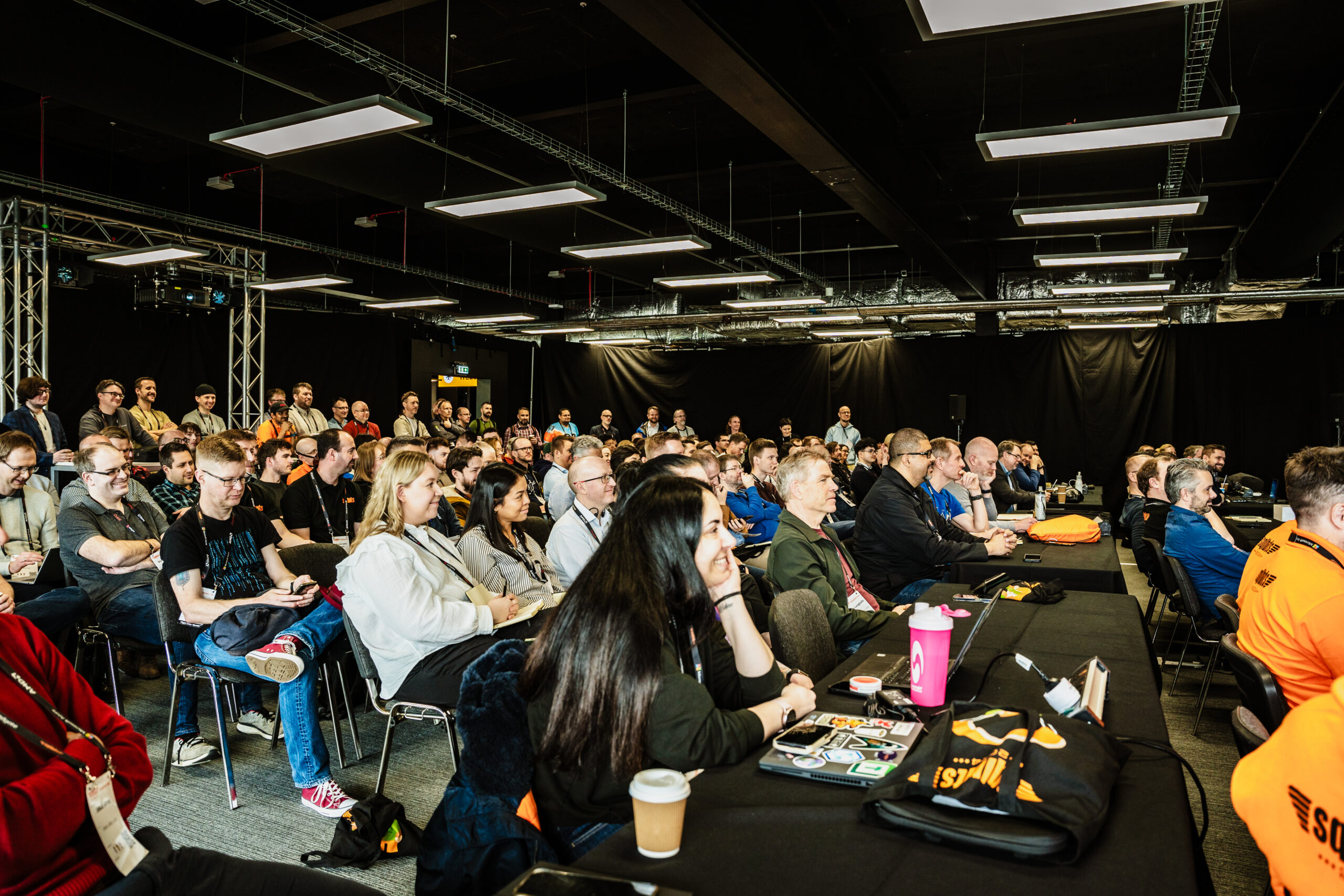
Bring your Python Engineering (data and Spark) questions to the people who can answer them. Book your SQLBits 2027 pass today.